Picture this: It’s early 2026, and you’re sitting at a coffee shop overhearing two people debate whether Bitcoin is still the undisputed king of crypto or if Ethereum has finally closed the gap. Sound familiar? If you’ve been anywhere near the financial news cycle lately, this conversation is happening everywhere — from Wall Street trading desks to Reddit threads. So let’s actually dig into the numbers, reason through what they mean, and figure out what’s really going on with Bitcoin and Ethereum’s market share in 2026.
📊 The Current State of the Crypto Market in 2026
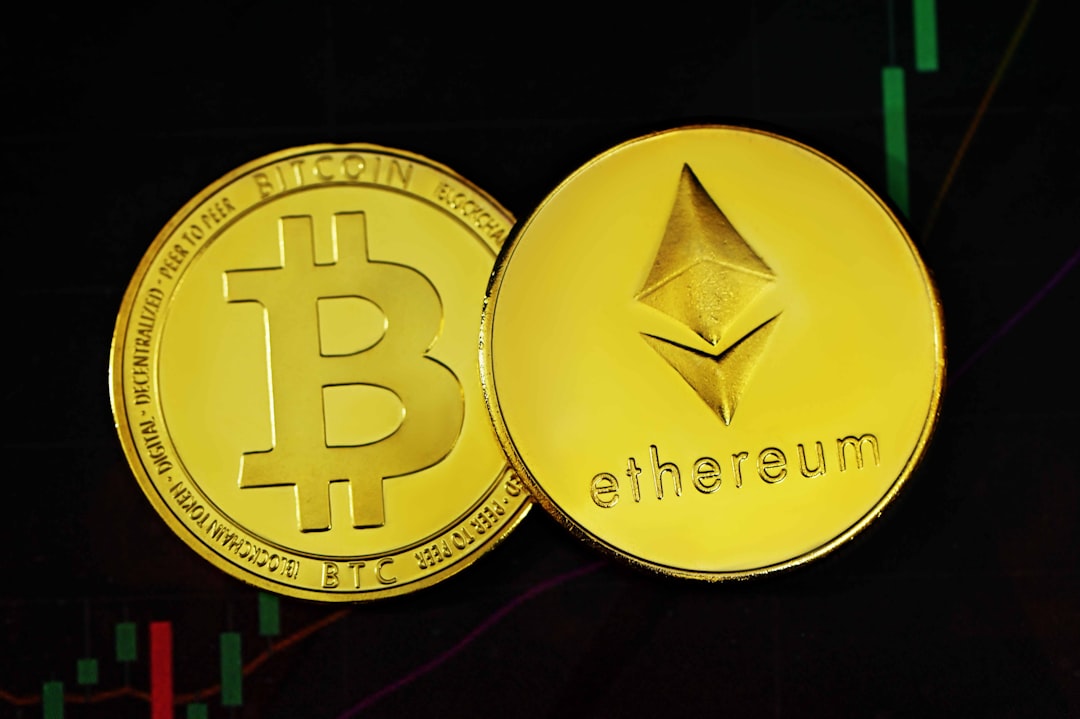
As of April 2026, Bitcoin (BTC) continues to hold the dominant position in total crypto market capitalization, sitting at approximately 52–54% market dominance — a figure that has surprised many analysts who predicted a more dramatic erosion of its lead. Ethereum (ETH), meanwhile, commands roughly 17–19% of total market cap, a notable recovery from its 2024 dip following the broader market correction cycle.
Here’s where it gets interesting: Bitcoin’s dominance actually increased in late 2025 and early 2026, largely driven by the continued inflows into U.S.-listed Bitcoin ETFs and growing institutional adoption. Meanwhile, Ethereum’s share has been more volatile, reflecting both the excitement around its Layer 2 ecosystem and the competitive pressure from alternative Layer 1 chains like Solana and Sui.
🔍 Why Bitcoin’s Dominance Is Holding Strong in 2026
A lot of people assumed the post-halving cycle (Bitcoin’s fourth halving occurred in April 2024) would lead to a rapid altcoin season that would dilute BTC’s share significantly. That happened — but only partially. Here’s why Bitcoin’s grip has remained tight:
- Institutional ETF Inflows: U.S. spot Bitcoin ETFs collectively surpassed $150 billion in total AUM by Q1 2026, pulling in pension funds and sovereign wealth vehicles that weren’t in the picture even two years ago.
- “Digital Gold” Narrative Reinforced: With ongoing macroeconomic uncertainty in Europe and currency devaluation concerns in emerging markets, Bitcoin’s store-of-value narrative got a significant real-world stress test — and passed for many investors.
- Regulatory Clarity: The 2025 U.S. Digital Asset Framework Act provided clearer guidelines for Bitcoin as a commodity, giving institutional players more legal confidence to hold BTC on their balance sheets.
- Supply Scarcity Effect: Post-halving dynamics reduced new BTC issuance to roughly 450 BTC/day, tightening supply against sustained demand.
⚡ Ethereum’s Evolving Role: Not Just “Silver” Anymore
Now, here’s the nuance that often gets lost in the BTC vs. ETH debate: comparing their market shares using raw market cap is a bit like comparing apples to oranges. Bitcoin is primarily a monetary asset. Ethereum is a programmable settlement layer — it’s infrastructure for an entire ecosystem of DeFi, NFTs, tokenized real-world assets (RWAs), and enterprise blockchain applications.
In 2026, Ethereum’s market share story looks different depending on which lens you use:
- By Market Cap: ETH sits at ~18%, trailing BTC significantly.
- By On-Chain Economic Activity: Ethereum and its Layer 2 networks (Arbitrum, Optimism, Base) process a combined daily transaction value that rivals or exceeds Bitcoin’s on-chain volume on most days.
- By Developer Activity: GitHub data and ecosystem reports consistently show Ethereum maintaining the largest active developer community in all of crypto, with over 6,000 monthly active developers as of early 2026.
- By Tokenized Asset Dominance: Over 65% of all tokenized real-world assets (bonds, commodities, real estate) are issued on Ethereum-compatible chains — a massive growth story that doesn’t fully show up in raw market cap numbers.
🌍 Global Context: What International Markets Tell Us
Let’s zoom out geographically for a moment. The 2026 crypto market is no longer just a U.S. and East Asian story.
South Korea: Korean exchanges like Upbit and Bithumb continue to show outsized Ethereum trading volumes relative to global averages, reflecting Korea’s historically strong affinity for altcoins and DeFi participation. The “Kimchi premium” on ETH has made occasional reappearances in 2026 during volatility spikes.
Europe: The EU’s MiCA (Markets in Crypto-Assets) regulatory framework, fully in force since 2025, has actually benefited Ethereum disproportionately. MiCA’s clear rules around utility tokens and stablecoins have accelerated enterprise Ethereum adoption among European financial institutions, with several large banks piloting tokenized bond issuance on Ethereum mainnet.
Emerging Markets: Countries in Southeast Asia and Latin America are increasingly using stablecoins on Ethereum Layer 2 networks for remittances and everyday payments — a use case that quietly builds Ethereum’s real-world utility floor even when its market cap share fluctuates.
🤔 So Who’s Actually “Winning”?
This is the fun part — let’s think through this logically rather than just rooting for a team. The “winning” metric really depends on what you’re optimizing for:
- If you care about store of value and inflation hedge: Bitcoin’s market dominance story in 2026 is compelling. Its scarcity model is working, institutional adoption is real, and regulatory clarity is improving.
- If you care about utility, yield, and ecosystem growth: Ethereum’s 2026 narrative — centered on Layer 2 scalability, tokenized RWAs, and DeFi maturity — makes a strong case for long-term value accrual even at a lower market cap share.
- If you’re a long-term diversified crypto investor: Holding both BTC and ETH in a portfolio continues to be the most defensible, evidence-backed approach — a point that most serious crypto allocators in 2026 seem to have converged on.
🛠️ Realistic Alternatives for Different Types of Readers
Not everyone is in the same financial situation, so let’s tailor the thinking:
- New to crypto in 2026? Starting with a simple 60/40 BTC/ETH allocation gives you exposure to both dominant narratives without overcomplicating things. Use regulated platforms and consider ETF wrappers if direct custody feels intimidating.
- Already holding BTC-heavy? The Ethereum Layer 2 ecosystem and RWA tokenization trend represent meaningful diversification that BTC alone doesn’t capture. A partial rebalance toward ETH isn’t a betrayal of Bitcoin — it’s portfolio logic.
- Interested in yield? Ethereum staking (currently yielding roughly 3.5–4.5% annually as of Q1 2026) offers a passive income layer that Bitcoin simply doesn’t have. This changes the risk/return math meaningfully for income-oriented investors.
- Risk-averse but crypto-curious? Regulated spot ETFs for both BTC and ETH are now widely available in the U.S., EU, and several Asian markets. You can get exposure without managing private keys or wallets.
The Bitcoin vs. Ethereum debate in 2026 isn’t a zero-sum game, and honestly, framing it that way has always been a bit of a distraction. What we’re watching is two fundamentally different value propositions mature simultaneously — one as programmable money’s reserve asset, the other as the world’s programmable settlement layer. Both narratives have real traction, real data, and real adoption behind them in 2026. The smarter question isn’t “which one wins” — it’s “which one fits what you actually need from your investment?”
Editor’s Comment : After spending a good chunk of 2026 watching this market, what genuinely excites me isn’t picking a winner — it’s watching two technologies find their real-world footing at the same time. Bitcoin’s institutional maturation and Ethereum’s utility expansion are happening in parallel, not in competition. If you’re still waiting for one to “kill” the other before making a decision, you might be waiting a very long time. Start small, stay curious, and revisit your assumptions every quarter — that’s the only strategy that consistently holds up.
📚 관련된 다른 글도 읽어 보세요
- Blockchain Layer 2 Wars in 2026: Who’s Actually Winning the Scaling Race?
- NFT Market in 2026: What’s Actually Happening (And Where the Real Opportunities Are Now)
- NFT Market Recovery in 2026: Is the Digital Ownership Renaissance Finally Here?
태그: [‘Bitcoin market share 2026’, ‘Ethereum dominance 2026’, ‘BTC vs ETH comparison’, ‘crypto market capitalization 2026’, ‘Bitcoin ETF institutional adoption’, ‘Ethereum Layer 2 ecosystem’, ‘cryptocurrency investment strategy 2026’]
Leave a Reply