Picture this: It’s early 2026, and your coworker slides up to you at the coffee machine, eyes wide, whispering about a new altcoin that’s “guaranteed” to 10x by summer. Sound familiar? Whether you’ve been in the crypto game for years or you’re just starting to peek over the fence, the landscape of digital asset investment has never been more complex — or more consequential. The promises are louder, the tools are smarter, but so are the risks. Let’s think through this together, honestly and carefully.
The Current State of Digital Asset Markets in 2026
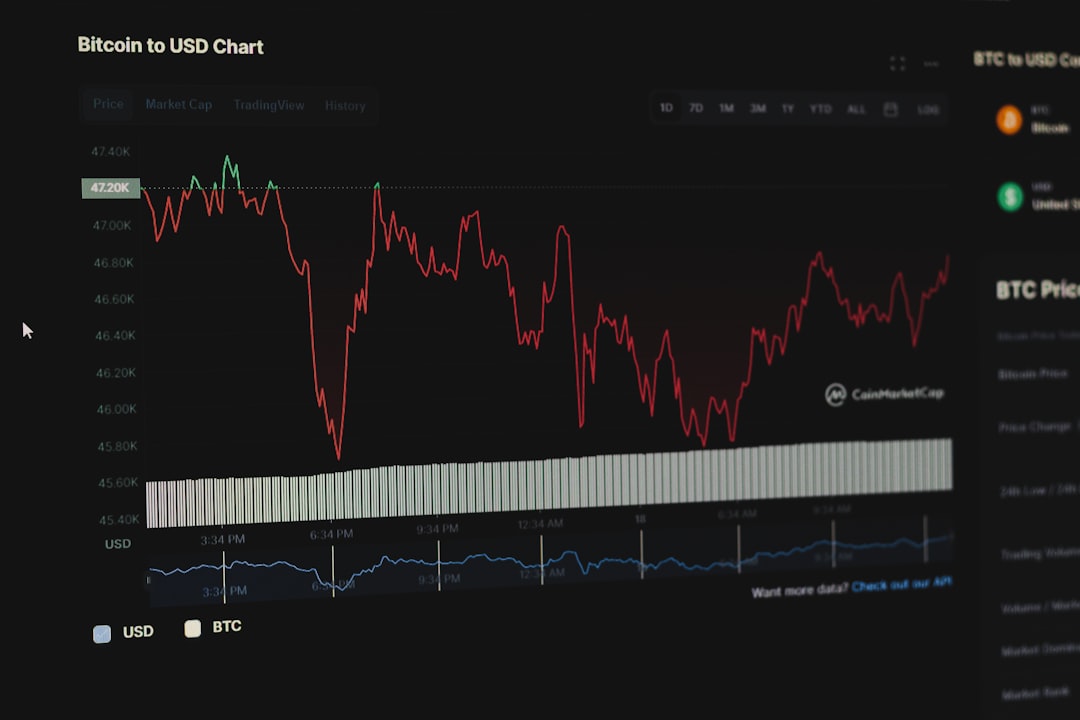
As of April 2026, global digital asset market capitalization hovers around $4.2 trillion, according to aggregated data from CoinMarketCap and Messari. Bitcoin dominance sits at roughly 48%, while Ethereum and a growing tier of Layer-2 solutions account for another 22%. On the surface, it looks like a maturing market. But maturation doesn’t mean safety — it means the risks are just wearing a more sophisticated disguise.
Regulatory frameworks have tightened considerably. The EU’s MiCA (Markets in Crypto-Assets) regulation is now fully enforced, and the U.S. Digital Asset Clarity Act — signed into law in late 2025 — has created clearer (but stricter) compliance requirements for exchanges and token issuers. While this legitimizes the space, it also means that non-compliant projects face sudden delistings, liquidity crises, and investor losses almost overnight.
Key Risk Categories You Can’t Ignore
Let’s break down the actual risk vectors that are most relevant right now. This isn’t scaremongering — it’s the kind of honest accounting that separates informed investors from wishful thinkers.
- Regulatory Risk: Governments in South Korea, India, and parts of the Middle East are still finalizing crypto tax and classification laws in 2026. A sudden policy shift can freeze trading, trigger sell-offs, or invalidate certain token categories entirely.
- Smart Contract Vulnerability: DeFi protocols lost an estimated $1.8 billion to smart contract exploits in 2025 alone. Even audited contracts carry residual risk — audits catch known vulnerabilities, not zero-day exploits.
- Liquidity Risk: Many mid-cap and small-cap tokens have thin order books. In a market panic, you may not be able to exit your position at anywhere near your desired price — this is called slippage, and it can be devastating.
- Custodial Risk: If your assets are on a centralized exchange and that exchange faces insolvency or a hack, your holdings may be frozen or permanently lost. The FTX collapse of 2022 is still a cautionary tale that echoes loudly in 2026.
- AI-Driven Market Manipulation: This is a newer concern. Algorithmic trading bots, now powered by advanced AI models, can create artificial price surges (pump-and-dump at machine speed) that retail investors cannot react to in time.
- Correlation Risk: During macro shocks — think interest rate surprises or geopolitical flare-ups — digital assets increasingly correlate with traditional risk assets like tech stocks, eliminating their supposed “hedge” value.
- Psychological Risk: FOMO (Fear of Missing Out) and FUD (Fear, Uncertainty, Doubt) remain devastatingly effective at causing investors to buy high and sell low. This is not unique to crypto, but the 24/7 news cycle amplifies it dramatically.
Real-World Examples: Lessons from 2025–2026
Let’s ground this in actual events, because data without context is just noise.
The Terra 2.0 Repeat Pattern (Southeast Asia, 2025): A stablecoin project launched with heavy marketing across Vietnam and Indonesia promised algorithmic yield stability. By Q3 2025, a bank-run dynamic collapsed the peg within 72 hours, wiping out an estimated $340 million in retail investor funds — most of whom had invested via mobile apps with minimal disclosure. Sound eerily familiar to the original Terra/LUNA collapse? That’s exactly the point.
South Korea’s Crypto Tax Reform (2026): South Korea’s revised virtual asset taxation law, which took effect in January 2026, imposes a 22% capital gains tax on digital asset profits above ₩2.5 million annually. This triggered a notable outflow from Korean exchanges in Q1 2026, demonstrating how regulatory changes can immediately reshape market dynamics — often before most retail investors have time to reposition.
BlackRock’s Tokenized Fund Volatility: Even institutional-grade tokenized treasury funds, which were considered “safe” digital assets, saw redemption queues and temporary liquidity gaps during a March 2026 global bond yield spike. This showed that even the “safe” corner of the digital asset world isn’t immune to macro forces.
Realistic Alternatives and Risk Mitigation Strategies
Here’s where I want to be genuinely useful rather than just cautionary. If you believe in the long-term potential of digital assets but want to navigate the risks more intelligently, here’s what actually makes sense in 2026:
- Use regulated, insured custodians: Look for exchanges and custodians that are MiCA-compliant (if you’re in Europe) or registered with the CFTC/SEC framework in the U.S. Some now offer limited FDIC-equivalent protections on fiat holdings.
- Cold wallet for long-term holdings: If you’re holding Bitcoin or Ethereum as a long-term store of value, keep the majority in a hardware wallet (Ledger, Trezor, etc.). “Not your keys, not your coins” is still the most relevant phrase in this space.
- Portfolio allocation discipline: Many financial advisors in 2026 suggest capping digital asset exposure at 5–15% of a total portfolio depending on risk tolerance. This lets you participate in upside without catastrophic downside.
- Dollar-cost averaging (DCA): Instead of lump-sum investments — which are particularly dangerous in volatile markets — consider regular, fixed-amount purchases. This smooths out your entry price over time.
- Explore tokenized real-world assets (RWAs): Tokenized real estate, government bonds, and commodities offer blockchain-based ownership with underlying physical asset backing — a more stable alternative to speculative tokens.
- Stay educated on regulatory updates: Follow resources like CoinDesk, The Block, or your local financial regulator’s announcements. A 30-minute weekly reading habit can literally save you from the next regulatory blindside.
The Bottom Line: Calculated Participation, Not Blind Faith
Digital assets in 2026 are neither the guaranteed wealth machine that influencers promise nor the complete scam that skeptics declare. They occupy a genuinely complex middle ground — one with real innovation, real opportunity, and real, significant risk. The investors who thrive here aren’t the ones who go all-in on a hot tip. They’re the ones who understand exactly what they own, why they own it, and what they’ll do when things go sideways — because at some point, they always do.
Think of it like mountain climbing. The view from the top can be extraordinary. But you’d better know what gear you’re carrying, check the weather forecast, and have a clear plan for the descent. The mountain doesn’t care about your optimism.
Editor’s Comment : After spending considerable time researching the digital asset landscape for this piece, what strikes me most is how the risks in 2026 are less about “is crypto real?” and more about “do you understand what you’re actually holding?” The technology has matured, but human behavior around it hasn’t as much as we’d like to think. My honest advice: before you invest a single dollar, spend at least as many hours researching as you’d spend on any major purchase — because in this space, the consequences of impulse decisions are felt much faster and much harder. Invest with your eyes open, not just your hopes high.
📚 관련된 다른 글도 읽어 보세요
- CBDC in 2026: Which Countries Are Actually Using Central Bank Digital Currencies Right Now?
- 비트코인 vs 이더리움 생태계 비교 분석 2026: 당신의 선택은?
- Blockchain Layer 2 Wars in 2026: Who’s Actually Winning the Scaling Race?
태그: [‘digital asset investment 2026’, ‘cryptocurrency risk management’, ‘crypto regulation 2026’, ‘DeFi risks’, ‘blockchain investment strategy’, ‘tokenized assets’, ‘crypto portfolio diversification’]
Leave a Reply