Picture this: it’s early 2026, and a friend of mine — a casual crypto investor — casually mentions she switched exchanges three times in the past year. Not because of hacks or bad UI, but purely because of trading fees. “It adds up,” she shrugged. And she’s absolutely right. In a market where billions of dollars change hands daily, even a 0.1% difference in fees can translate into thousands of dollars lost — or saved — over a year of active trading.
So let’s dig into what’s actually happening in the crypto exchange landscape in 2026, how the fee competition has evolved, and — most importantly — how you can make smarter choices based on your own trading style.
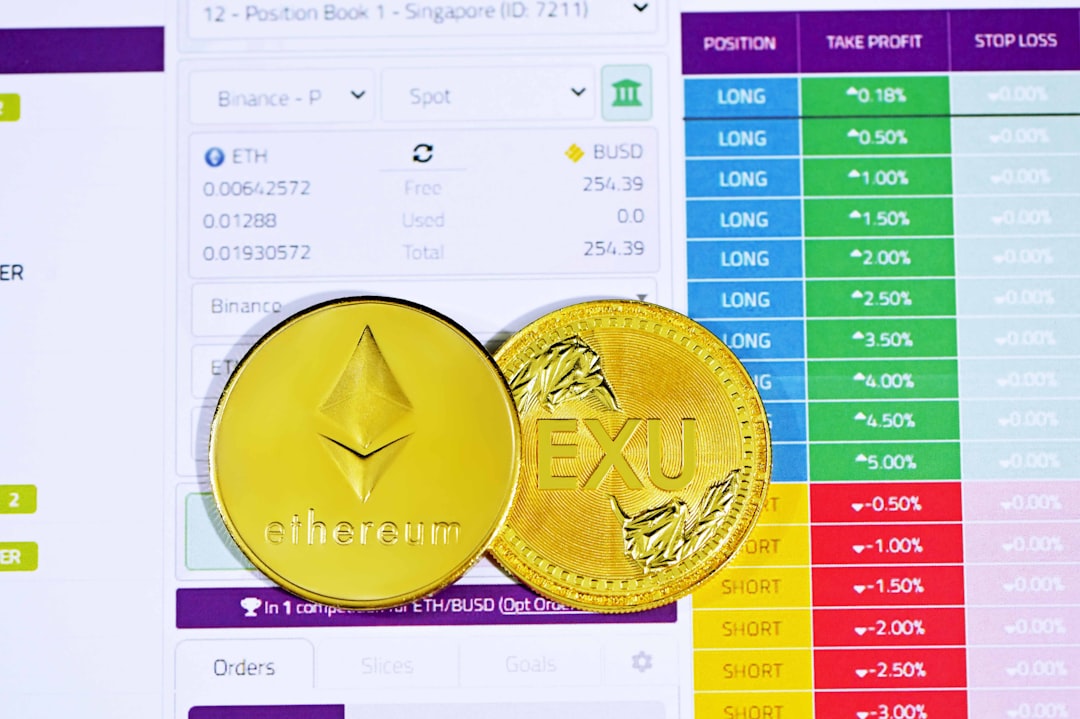
The Current Competitive Landscape: A Battle for Volume
The global crypto exchange market in 2026 is not what it was even two years ago. After a wave of regulatory crackdowns, exchange consolidations, and a few high-profile collapses, the surviving players have doubled down on one key differentiator: fee structure. Here’s a snapshot of where major platforms stand:
- Binance: Maintains its position as the volume leader with a standard maker/taker fee of 0.10%/0.10%, dropping to as low as 0.02%/0.04% for high-volume traders using BNB for fee discounts. Their VIP tier system remains one of the most aggressive in the industry.
- Coinbase Advanced: After years of criticism for high fees on its retail interface, Coinbase Advanced now offers 0.00%/0.05% maker/taker for top-tier users, but average retail users still pay closer to 0.40–0.60% per transaction on the standard app — a notable gap.
- Bybit: Has aggressively positioned itself as the mid-tier trader’s best friend, offering 0.10%/0.10% standard with derivatives fees as low as 0.02% for makers. Their 2026 loyalty program has gained significant traction in Southeast Asia and Europe.
- OKX: Competes heavily on derivatives, offering 0.02%/0.05% maker/taker on futures, and has been attracting institutional flow with near-zero fees for verified institutional accounts.
- Upbit & Bithumb (Korea): Domestic Korean exchanges have historically charged a flat 0.05% transaction fee, but the “kimchi premium” dynamics still make fee comparison more nuanced — you’re often paying for liquidity access, not just execution.
- Kraken: Known for security reputation, their fees start at 0.25%/0.40% for beginners, which is steep, but they’ve introduced a new Kraken Pro Lite tier in early 2026 to compete for casual traders.
Why Fees Are More Complicated Than They Look
Here’s where most people get tripped up: the advertised fee is rarely the actual fee you pay. Let’s break down what really eats into your returns:
- Spread costs: Especially on retail-facing apps, the buy/sell spread can quietly cost you 0.5–1.0% without showing up as a “fee.”
- Withdrawal fees: Moving Bitcoin off Binance costs roughly 0.0002 BTC (~$17–20 at current prices). On some smaller exchanges, this can balloon to 0.001 BTC. For frequent movers, this matters enormously.
- Conversion fees: Instant buy features on platforms like Coinbase typically embed a 1.49–2.99% convenience fee. Beginners often don’t realize they’re paying this.
- Funding rates on perpetual futures: If you hold leveraged positions overnight, funding rates — which can swing between -0.1% and +0.1% every 8 hours — can cost more than the trading fee itself.
The Decentralized Exchange (DEX) Wild Card
It’s impossible to talk about 2026 exchange competition without acknowledging decentralized exchanges. Platforms like Uniswap v4, dYdX v5, and the rising Hyperliquid have fundamentally disrupted the fee conversation. Hyperliquid, in particular, has attracted attention for offering zero maker fees on its on-chain perpetuals platform, with taker fees around 0.035% — numbers that centralized exchanges simply can’t match without subsidizing losses.
However, DEXs come with their own cost structures: gas fees on Ethereum-based platforms can spike during congestion, and the concept of MEV (Maximal Extractable Value) — where bots front-run your transactions — represents a hidden tax that’s notoriously hard to quantify for everyday users. Layer 2 solutions and Solana-based DEXs have largely mitigated gas issues, but MEV remains a persistent friction point.
Domestic vs. International: The Korean Market Lens
South Korea remains one of the most active retail crypto markets globally, with Upbit consistently ranking in the top 5 by spot trading volume. But here’s the tension: Korean exchanges operate under strict FSC (Financial Services Commission) regulations, which limits their fee flexibility compared to offshore competitors. Upbit’s flat 0.05% fee sounds great on paper, but limited coin listings and the won-denominated liquidity pool mean Korean traders often miss arbitrage opportunities available to users of international platforms.
An interesting trend in 2026: more Korean traders are using hybrid strategies — holding KRW-denominated assets on domestic exchanges for regulatory safety, while routing more sophisticated trades through Bybit or OKX via stablecoin bridges. It’s a workaround that highlights how fee competition is driving behavioral changes at the user level.
Who Should Use What? A Realistic Framework
- Beginner investors (monthly volume under $5,000): Coinbase or Upbit for simplicity and regulatory trust — accept the higher fees as a “learning tax.” As you grow, migrate to Advanced interfaces.
- Active retail traders ($5,000–$50,000/month): Binance or Bybit offer the best fee-to-feature ratio. Enabling native token discounts (BNB or similar) can reduce costs by 20–25%.
- High-frequency or derivatives traders: OKX or Hyperliquid. The ultra-low maker fees and deep derivatives liquidity are worth the learning curve.
- Privacy-conscious or DeFi-native users: Solana-based DEXs or Hyperliquid for on-chain transparency, accepting that MEV risk requires careful slippage management.
- Institutional players: Negotiate OTC desk rates directly — public fee schedules rarely apply at scale.
The Bigger Picture: Fee Compression and What It Signals
The race to zero fees isn’t really about altruism — it’s about market share and data. Exchanges that sacrifice fee revenue are betting on monetizing through staking services, lending products, launchpads, and payment rails. Binance’s ecosystem strategy is the clearest example: fees are almost a loss-leader compared to the revenue generated by BNB burn mechanisms, Launchpool, and Web3 wallet integrations.
What this means for you: an exchange offering “zero fees” on spot trading may be quietly earning on your assets through lending programs or proprietary trading against your order flow. Reading the full revenue model of your exchange is just as important as reading the fee schedule.
The competitive dynamic in 2026 ultimately rewards informed, flexible users. The worst outcome is staying loyal to one platform out of habit when a 20-minute account setup on a competing exchange could save you hundreds of dollars a year.
Editor’s Comment : Fee comparison is genuinely one of the most underrated skills in crypto investing. Most people spend hours researching which coin to buy but five minutes choosing where to trade it — which is honestly backwards. My honest take: don’t chase the absolute lowest fee if it means sacrificing liquidity, security, or regulatory protection. But if you’re on a platform that’s charging you 10x what competitors charge for equivalent service? That’s not loyalty, that’s inertia. Start with a simple fee audit of your last 90 days of trading history — the numbers might surprise you.
태그: [‘crypto exchange fees 2026’, ‘cryptocurrency trading fee comparison’, ‘Binance vs Coinbase fees’, ‘best crypto exchange 2026’, ‘decentralized exchange DEX fees’, ‘crypto trading cost optimization’, ‘virtual asset exchange competition’]
Leave a Reply