A friend of mine — a former Wall Street quant turned DeFi yield farmer — called me last month slightly panicked. He’d just watched his liquidity pool position on a mid-tier protocol swing 34% in 48 hours, and he wasn’t sure if he was witnessing a genuine market rotation or just another round of sophisticated manipulation. “I’ve modeled equity derivatives for 15 years,” he said, “and I still can’t tell if DeFi is efficient or just chaotic.” That conversation stuck with me, because honestly? Both things are true simultaneously — and that’s exactly what makes the 2026 crypto, DeFi, and NFT landscape so fascinating and so dangerous.
Let’s dig into what the data is actually telling us, strip away the hype, and figure out where the real structural shifts are happening.
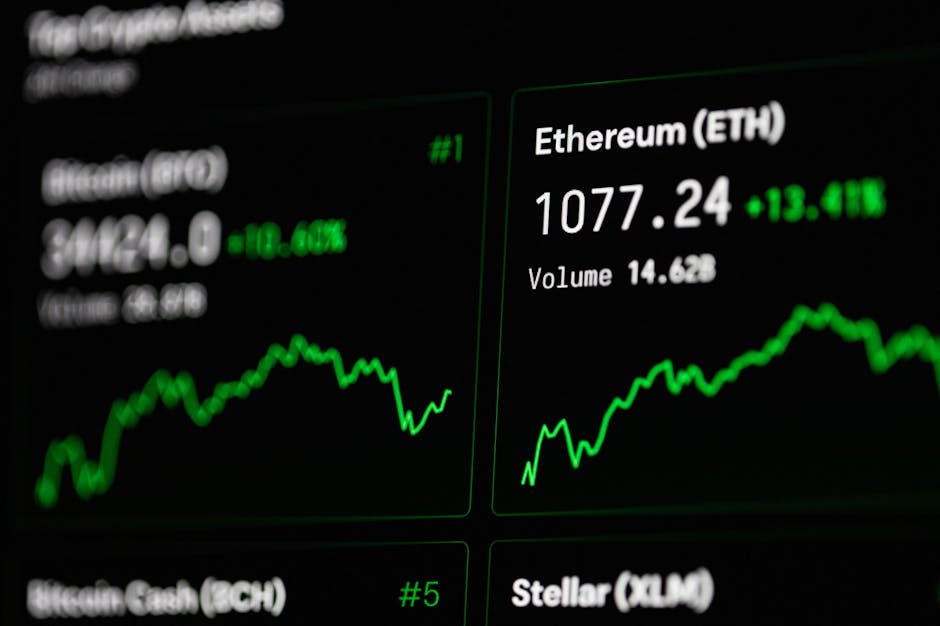
📊 The Macro Picture: Where Crypto Stands in Q1–Q2 2026
After the turbulent re-pricing cycles of 2023–2024, the crypto market has entered what analysts are calling a “structural maturation phase.” As of April 2026, total crypto market capitalization hovers around $4.2 trillion, roughly 2.3x its level at the start of 2024. Bitcoin dominance has stabilized between 48–52%, which is significant — it suggests institutional portfolios are no longer purely BTC-denominated but haven’t fully rotated into altcoins either.
Ethereum remains the backbone of DeFi activity, but its share of total DeFi TVL (Total Value Locked) has slipped to approximately 54% from a high of ~68% in early 2023. Layer 2 networks — particularly Arbitrum, Base, and zkSync Era — have collectively absorbed nearly $28 billion in TVL, a trend that reflects real user behavior, not just airdrop farming.
🔗 DeFi in 2026: Maturity, Consolidation, and Real Yield
The DeFi narrative has fundamentally shifted. We’re no longer in the “print infinite APY from protocol emissions” era. The 2026 DeFi market is defined by three forces:
- Real Yield Protocols: Platforms like GMX v3, Pendle Finance, and Ethena are generating sustainable returns backed by actual revenue — trading fees, interest rate spreads, and real-world asset (RWA) yields — rather than token inflation.
- RWA (Real-World Asset) Integration: BlackRock’s tokenized Treasury fund (BUIDL), Franklin Templeton’s on-chain money market, and MakerDAO’s $2.4B RWA collateral base have brought institutional-grade assets on-chain. This isn’t a pilot anymore — it’s a $12B+ sector.
- Cross-Chain Liquidity Wars: With LayerZero V2 and Chainlink CCIP now battle-tested, liquidity fragmentation is being actively addressed. Protocols are competing fiercely for “sticky” capital that doesn’t just hop chains for farming incentives.
The critical risk management insight here: TVL alone is no longer a reliable quality metric. You need to look at revenue-to-TVL ratios. A protocol with $500M TVL generating $2M/month in fees is fundamentally healthier than one with $2B TVL generating $500K/month.
🎨 NFT Market in 2026: Death, Rebirth, and Segmentation
Let me be honest — the generalist NFT market is largely dead, and that’s actually healthy. The speculative free-for-all of 2021–2022 burned a lot of retail participants. What’s emerged in its place is far more interesting and structurally sound.
According to data from DappRadar and NFTScan, monthly NFT trading volume in Q1 2026 averaged around $1.8 billion — down significantly from the $4–5B monthly peaks of 2022, but critically, the composition of that volume has changed:
- Gaming & Interoperable Assets: NFTs tied to actual gameplay utility (e.g., Illuvium, Shrapnel, Parallel TCG) now account for ~31% of total volume.
- Digital Identity & Credentials: Soulbound tokens and on-chain credentials (think ENS, Lens Protocol profiles, and university-issued digital diplomas via Blockcerts) are growing 40%+ YoY.
- Music & Creator Royalties: Platforms like Sound.xyz and Catalog have established models where artists earn ongoing royalties from secondary sales — finally making the “creator economy” argument for NFTs actually work.
- High-Value Fine Art: Blue-chip collections (CryptoPunks, Fidenza, XCOPY works) continue to hold value as verifiable digital provenance becomes a recognized concept in traditional auction houses like Sotheby’s and Christie’s.
- Phygital (Physical + Digital) Luxury: Brands like LVMH (via Aura Blockchain Consortium) and Nike (via .SWOOSH) now routinely pair physical products with NFT authenticity certificates.

🔍 Case Studies Worth Paying Attention To
Aave V4 (International): Aave’s fourth major iteration launched with cross-chain liquidity hubs and unified liquidity layers. By Q1 2026, it’s processing over $800M in daily borrowing volume, with a protocol revenue rate that makes it one of the few DeFi protocols with a credible path to self-sustaining operations without token subsidies. This is the model everyone else is chasing.
Kakao’s Klaytn/Kaia Network (Korea-specific): South Korea remains one of the most crypto-active retail markets globally (per Chainalysis 2025 Geography of Cryptocurrency Report). The merged Kaia network — combining Klaytn and Finschia — has been aggressively courting Korean entertainment conglomerates for NFT-based fan engagement. HYBE’s integration with the Kaia ecosystem for BTS-adjacent digital collectibles is a fascinating case of mainstream IP meeting blockchain infrastructure.
Uniswap V4 Hooks (Technical Deep Dive): For the more technically inclined, Uniswap V4’s “hooks” architecture — allowing custom logic to attach to pool lifecycle events — has spawned an entire secondary developer ecosystem. Over 200 hook contracts are now audited and live, enabling dynamic fee tiers, on-chain limit orders, and TWAP-based MEV protection. The composability here is genuinely new territory.
⚠️ Risk Vectors You Shouldn’t Ignore in 2026
- Regulatory patchwork: MiCA is live in the EU, the US has passed a framework (albeit a contested one), but Asia remains fragmented. This creates arbitrage risk — and jurisdictional whiplash for projects operating globally.
- Smart contract complexity creep: As protocols get more sophisticated (V4 hooks, intent-based architectures, restaking layers like EigenLayer), the attack surface expands. The industry lost over $600M to exploits in 2025 alone.
- Liquidity illusion in NFTs: Floor prices can be manufactured. Always look at actual sales volume and unique buyer counts, not just floor price trends.
- Restaking systemic risk: EigenLayer and similar restaking protocols concentrate validator risk. If a major AVS (Actively Validated Service) fails, the slashing cascades could be non-trivial.
🧭 What a Risk-Conscious Position Actually Looks Like Right Now
Here’s my honest take, coming from someone who’s watched multiple full cycles: the 2026 market rewards specificity and punishes generalism. Broad “crypto exposure” through an index approach is fine for passive allocation, but if you’re actively engaging with DeFi or NFTs, you need a thesis for each position.
A reasonable framework might look like: 40–50% in base-layer assets (BTC, ETH) as foundational liquidity, 20–30% in revenue-generating DeFi protocols you can actually evaluate by reading audited financial dashboards on Token Terminal or DeFiLlama, 10–15% in selective NFT positions tied to genuine utility or verified cultural provenance, and keeping 15–20% in stablecoins or RWA-backed instruments for opportunistic deployment.
Above all, size your positions relative to your ability to handle total loss. This market is still young enough that even the best-researched positions can go to zero via unexpected vectors — regulatory action, oracle failure, bridge exploit, or just plain market irrationality.
Editor’s Comment : The 2026 crypto, DeFi, and NFT market isn’t the Wild West it was in 2021 — but it’s not a mature financial market either. It’s somewhere genuinely novel in between, and that’s both the opportunity and the hazard. The smartest positioning right now isn’t maximum aggression or complete avoidance — it’s selective participation with clearly defined risk parameters, a genuine understanding of what you own, and the discipline to not let a hot narrative override your original thesis. Stay curious, stay skeptical, and always read the audit reports.
📚 관련된 다른 글도 읽어 보세요
- 2026년 가상자산 DeFi·NFT 시장 동향 완전 분석 — 살아남은 프로젝트들의 공통점은 무엇인가
- DeFi & NFT Market Ecosystem Report 2026: What’s Actually Happening and Where It’s Headed
- 가상자산 거래소 시장 점유율 분석 2026: 누가 왕좌를 차지하고 있을까?
태그: DeFi market trends 2026, NFT market analysis, crypto market outlook, real world assets blockchain, DeFi TVL analysis, digital assets investment, Web3 market trends
Leave a Reply