Picture this: it’s late January 2026, and your accountant calls you with that familiar mix of urgency and mild panic in their voice. “So… about those crypto gains from last year…” Sound familiar? If you’ve been riding the digital asset wave — whether it’s Bitcoin, Ethereum, or any of the newer layer-2 tokens — you’ve probably had at least one of these conversations. The global regulatory landscape for cryptocurrency taxation has shifted dramatically, and what worked (or didn’t get caught) two or three years ago is no longer flying under the radar.
Here’s the thing: governments around the world have gotten seriously sophisticated about tracking crypto transactions. But here’s also the good news — once you understand how different countries are approaching this, you can make much smarter decisions about where you invest, how you hold assets, and what strategies are actually legal and worth your time. Let’s dig in together.
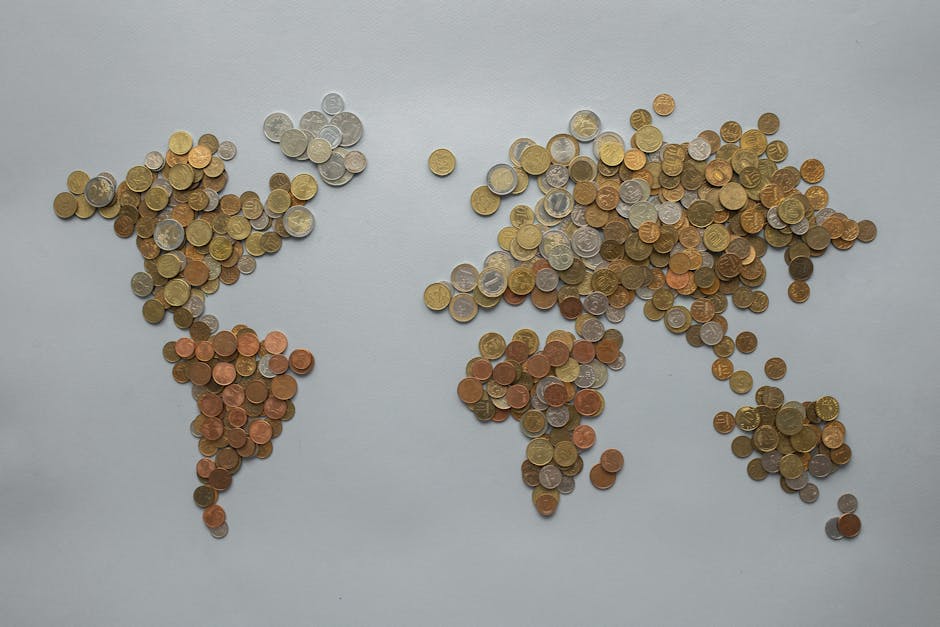
📊 The Big Picture: How Much Are Governments Actually Collecting?
In 2026, crypto tax enforcement is no longer a theoretical conversation — it’s generating real revenue. According to estimates from the OECD’s Crypto-Asset Reporting Framework (CARF), which became operationally active across 48 member countries in 2025, cross-border crypto tax data sharing has already flagged billions in previously unreported gains. The IRS in the United States alone reported a 340% increase in crypto-related enforcement actions between 2023 and 2025.
Meanwhile, the global crypto market capitalization continues to hover around the $3.5–4 trillion range as of early 2026, making it a tax target too large for any government to ignore. The OECD’s CARF essentially functions like the FATCA (Foreign Account Tax Compliance Act) of the crypto world — exchanges must now report user data internationally, closing the “just keep it offshore” loophole that many investors naively relied on.
🌍 Country-by-Country Breakdown: Who’s Doing What?
Let’s walk through the major jurisdictions, because the differences are genuinely striking — and strategically important.
🇺🇸 United States
The U.S. treats cryptocurrency as property, not currency. This means every single taxable event — selling, trading one crypto for another, or even using crypto to buy a coffee — triggers a capital gains calculation. Short-term gains (assets held under one year) are taxed as ordinary income, which can reach up to 37% for high earners. Long-term gains (over one year) are taxed at 0%, 15%, or 20% depending on your income bracket. The 2026 tax year also marks the full enforcement of the Infrastructure Investment and Jobs Act’s broker reporting requirements, meaning U.S.-based exchanges must issue 1099-DA forms — a crypto-specific 1099 — to both users and the IRS.
🇩🇪 Germany
Germany remains one of the most crypto-friendly developed economies for long-term holders. If you hold crypto for more than 12 months, your gains are completely tax-free — yes, zero percent. Short-term gains under €600 per year are also exempt. This has made Germany particularly attractive for European crypto investors with a patient, long-term outlook.
🇸🇬 Singapore
Singapore still levies no capital gains tax on crypto as of 2026, though businesses that trade crypto as their primary activity are taxed on profits as ordinary business income. Singapore’s Monetary Authority (MAS) has focused more on licensing and AML (Anti-Money Laundering) compliance than on taxing individual investors, making it a regional hub for crypto businesses and high-net-worth individuals.
🇯🇵 Japan
Japan is on the stricter end of the spectrum. Crypto gains are classified as “miscellaneous income” and taxed at rates up to 55% when combined with other income. There’s been significant lobbying by the Japanese crypto industry to shift to a flat capital gains tax rate (around 20%), but as of early 2026, the Diet has not passed that reform yet — though it remains actively debated.
🇰🇷 South Korea
After multiple delays, South Korea officially implemented its 20% flat tax on crypto gains exceeding 2.5 million KRW (approximately $1,800 USD) starting in January 2025. By 2026, the system is in its second year of full enforcement, with the National Tax Service (NTS) using blockchain analytics tools to cross-reference exchange data. The relatively low threshold means many retail investors are now filing crypto taxes for the first time.
🇦🇪 UAE
The UAE continues to have no personal income tax and no capital gains tax, making Dubai and Abu Dhabi magnets for crypto entrepreneurs and investors. The country has established clear virtual asset regulatory frameworks through VARA (Virtual Assets Regulatory Authority) in Dubai, which actually adds legitimacy and institutional confidence rather than just offering a tax haven.
🇬🇧 United Kingdom
The UK taxes crypto gains through its Capital Gains Tax (CGT) system. The annual exempt amount was slashed to just £3,000 in 2024 and remains at that level in 2026. Gains above that threshold are taxed at 18% for basic-rate taxpayers or 24% for higher-rate taxpayers (rates adjusted in the 2025 Autumn Budget). HMRC has been aggressively pursuing non-filers using data from exchanges operating in the UK.

🔍 Key Patterns Worth Noticing
- The “property vs. currency” divide: Countries that treat crypto as property (USA, UK, Australia) trigger a tax event on every transaction, while countries experimenting with currency-like treatment have fewer but larger taxable moments.
- Staking and DeFi income is now firmly in scope: In virtually every major jurisdiction, staking rewards, lending interest, and DeFi yield are treated as ordinary income at the time of receipt. The “I didn’t sell anything” argument no longer holds.
- NFT taxation is becoming clearer: Most OECD countries now treat NFT sales as capital gains events, though some jurisdictions are exploring collectibles tax rates (which can be higher) for certain NFT categories.
- Loss harvesting is still powerful where allowed: In the U.S., tax-loss harvesting (selling at a loss to offset gains) remains a legitimate strategy. Unlike stocks, the wash-sale rule does NOT currently apply to crypto in the U.S. as of 2026 — though legislation to change this has been proposed multiple times.
- International data sharing is the new normal: Under CARF and bilateral agreements, your foreign exchange account data is increasingly accessible to your home country’s tax authority. Offshore exchange accounts are not the loophole they once were.
💡 Realistic Strategies: What Can You Actually Do?
Okay, so now that we’ve absorbed all of that, let’s think practically — because doom-scrolling through tax rates isn’t the point. Here’s how to actually navigate this intelligently:
1. Match your holding strategy to your jurisdiction. If you’re in Germany and playing long-term, the 12-month tax-free rule is a massive structural advantage — use it deliberately. If you’re in Japan and facing 55% marginal rates, the math on frequent trading becomes brutal, and you might want to reconsider your trading frequency or explore legal entity structures.
2. Track everything from day one. The single biggest mistake crypto investors make is not keeping records. Tools like Koinly, CoinTracker, and TokenTax have matured significantly and now support hundreds of exchanges and DeFi protocols. Start using one immediately — retroactive record reconstruction is painful and expensive.
3. Consider tax-advantaged structures where legal. In some jurisdictions, holding crypto through a self-directed IRA (USA), a pension wrapper, or a regulated investment company structure can defer or reduce taxes. This isn’t available everywhere, and the rules are complex — get professional advice specific to your country.
4. Don’t ignore small transactions. That $40 coffee you paid for with ETH in 2025? That’s technically a taxable event in the U.S., UK, and many other jurisdictions. Software tools handle these automatically, but manual filers often miss hundreds of small transactions that add up.
5. If you’re considering relocation for tax purposes, do it properly. Moving to the UAE or Portugal (which has a favorable NHR regime) can be legitimate, but you must actually establish genuine tax residency and comply with exit tax rules in your home country. “Crypto nomad” tax strategies that rely on ambiguous residency are increasingly being challenged by tax authorities.
🌐 The Road Ahead: What 2026 Signals for 2027 and Beyond
The trajectory is clear: global crypto tax enforcement is tightening, not loosening. The OECD’s CARF framework will continue expanding to new jurisdictions. AI-powered blockchain analytics (used by firms like Chainalysis and TRM Labs, now contracted by dozens of tax agencies) will keep improving at tracing wallet activity. The days of treating crypto as an unreported asset class are genuinely over for anyone in a developed economy.
But — and this is important — clarity is actually good for the market long-term. When investors know the rules, institutional money flows more confidently. Countries that offer clear, fair frameworks (rather than punitive or confusing ones) will attract talent, capital, and innovation. We’re seeing that play out in real time in Singapore, the UAE, and increasingly in parts of the EU post-MiCA implementation.
The smartest move in 2026 isn’t to avoid crypto taxes — it’s to understand them deeply enough to optimize legally, stay compliant, and make jurisdiction-aware investment decisions.
Editor’s Comment : The global crypto tax patchwork in 2026 is genuinely complex, but it’s navigable — and honestly, the complexity itself creates opportunity for informed investors. The biggest risk isn’t the tax rate; it’s being caught off guard by rules you didn’t know applied to you. Take an afternoon, plug your transaction history into a crypto tax tool, and have one conversation with a tax professional who actually understands digital assets. That single investment of time and money could save you from a very unpleasant conversation with your tax authority down the road. You’ve done the hard work of building a crypto portfolio — protect it with equally smart tax hygiene.
📚 관련된 다른 글도 읽어 보세요
- 블록체인, 이제 우리 일상 속으로 — 2026년 실생활 적용 사례 총정리
- 2026년 가상자산 레이어2 블록체인 시장 트렌드 완전 분석 — 지금 주목해야 할 이유
- DeFi vs CeFi 생태계 비교 분석 2026: 어디에 올라타야 할까?
태그: [‘crypto tax 2026’, ‘global cryptocurrency regulation’, ‘bitcoin capital gains tax’, ‘crypto tax by country’, ‘OECD CARF framework’, ‘digital asset taxation’, ‘cryptocurrency investment strategy’]
Leave a Reply