Picture this: It’s early 2026, and your colleague at work casually mentions they’ve been earning 12% APY on their stablecoin holdings — not through a bank, not through a brokerage, but through a smart contract running autonomously on a blockchain. Meanwhile, another friend just got their crypto account frozen by a centralized exchange during a market volatility spike, losing access to funds for three critical days. Same asset class, wildly different experiences. That contrast right there? That’s the DeFi vs CeFi story in a nutshell.
Let’s think through this together — because the gap between Decentralized Finance (DeFi) and Centralized Finance (CeFi) isn’t just technical jargon. It’s reshaping how billions of dollars flow globally, and understanding the nuances could genuinely change how you manage your financial life.
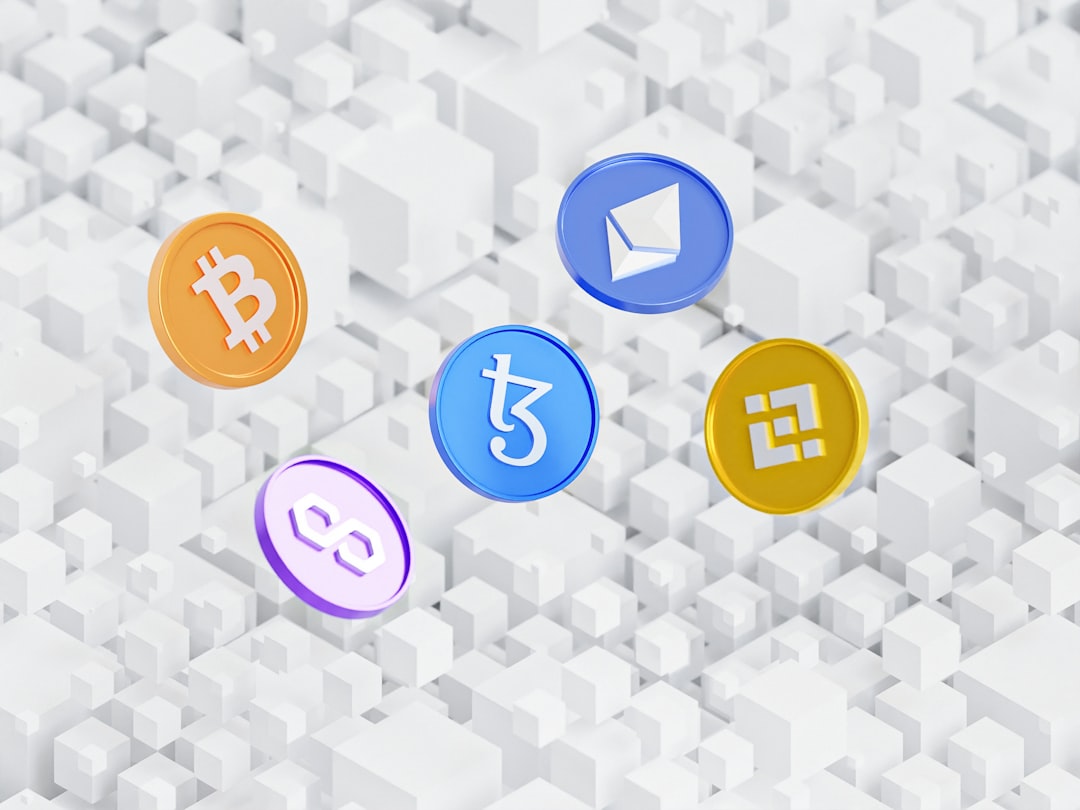
🔍 What Are We Actually Comparing? Setting the Stage
Before diving into data, let’s clarify the terms — because they get muddled constantly.
- CeFi (Centralized Finance): Platforms like Coinbase, Binance, Kraken, or traditional fintech apps that act as intermediaries. You trust a company to hold your assets, execute trades, and comply with regulations. Think of it like a digital bank for crypto.
- DeFi (Decentralized Finance): Protocols like Uniswap, Aave, Compound, or MakerDAO that operate via smart contracts on blockchains like Ethereum, Solana, or Arbitrum. There’s no company in the middle — code is law, and you retain custody of your assets at all times.
The philosophical divide is enormous: CeFi trades autonomy for convenience and regulatory protection. DeFi trades convenience for sovereignty and (theoretically) censorship resistance.
📊 The Numbers Tell an Interesting Story in 2026
As of Q1 2026, the Total Value Locked (TVL) in DeFi protocols has rebounded significantly from the 2022-2023 bear market lows, now hovering around $180–210 billion across major chains — with Ethereum still commanding roughly 52% of that ecosystem, followed by Solana at around 18% and emerging Layer-2 networks like Arbitrum and Base collectively accounting for another 20%.
CeFi, by contrast, continues to dominate sheer trading volume. Regulated exchanges globally process an estimated $60–80 billion in daily spot trading volume, dwarfing DeFi’s DEX (Decentralized Exchange) volumes which average around $8–12 billion daily. But here’s where it gets fascinating — DeFi’s growth rate over the past 18 months has outpaced CeFi’s user acquisition by roughly 3:1 in emerging markets, particularly across Southeast Asia and Latin America.
🌍 Real-World Examples: Who’s Winning Where?
Let’s look at some concrete cases that illustrate how this plays out in practice.
South Korea (Domestic Example): Korea’s crypto market remains one of the most active in the world, with platforms like Upbit and Bithumb (CeFi giants) still dominating domestic retail trading. However, Korean DeFi developers have been at the forefront of building on Klaytn (now rebranded and merged into the Kaia blockchain) and contributing heavily to Ethereum Layer-2 ecosystems. The interesting tension here: Korean regulations under the Virtual Asset User Protection Act (fully enforced since 2024) have pushed many sophisticated users toward DeFi to avoid mandatory KYC hurdles for certain transactions.
United States: Post the regulatory clarity of 2025’s Digital Asset Market Structure Act framework, CeFi players like Coinbase and Fidelity’s crypto arm have surged in institutional adoption. But simultaneously, Uniswap v4 (launched in late 2024) introduced “hooks” — customizable smart contract logic — which brought institutional-grade features directly into DeFi, blurring the line considerably.
Nigeria and Latin America: This is where DeFi is arguably winning most decisively. With currency devaluation crises and restricted banking access, users in Lagos and Buenos Aires are using protocols like Aave and Curve to access dollar-denominated savings products that their local banks simply cannot offer. It’s financial infrastructure built from the bottom up.

⚖️ Head-to-Head: Where Each Model Excels (and Struggles)
- Security & Custody — DeFi Edge: You hold your own private keys. No exchange hack can drain your wallet unless you’re directly targeted. However, smart contract vulnerabilities remain a real risk — over $1.2 billion was lost to DeFi exploits in 2025 alone.
- User Experience — CeFi Wins Handily: CeFi platforms have invested heavily in mobile UX. For someone new to crypto, onboarding to Coinbase takes minutes. Connecting a hardware wallet to Aave and navigating gas fees? That still requires meaningful technical literacy.
- Regulatory Compliance — CeFi Advantage: If you’re operating a business, need auditable transaction records, or require fiat on/off ramps, CeFi is simply more practical. Most DeFi protocols still lack robust fiat integration.
- Yield Opportunities — DeFi Often Leads: Liquidity provisioning on DEXs, yield farming, and lending protocols frequently offer higher returns than CeFi equivalents — though with correspondingly higher smart contract and market risk.
- Transparency — DeFi Structural Win: Every transaction, liquidity pool, and protocol parameter is publicly auditable on-chain. CeFi requires trust in financial disclosures that, as the FTX collapse demonstrated, can be catastrophically fabricated.
- Censorship Resistance — DeFi Dominant: Your assets cannot be frozen without compromising the underlying blockchain. In CeFi, account freezes, regulatory seizures, and platform insolvencies are documented, recurring risks.
🔮 The Convergence Trend: Hybrid Models Are Emerging
Here’s something genuinely exciting happening in 2026: the binary of “DeFi vs CeFi” is becoming increasingly outdated. We’re seeing a third category emerge — often called HyFi (Hybrid Finance) or regulated DeFi.
Projects like Maple Finance and TrueFi are blending on-chain transparency with off-chain credit assessments. Coinbase’s Base blockchain has become a CeFi-to-DeFi bridge that lets users access DeFi protocols with the onboarding simplicity of a centralized app. And institutional asset managers are deploying capital into tokenized real-world assets (RWAs) — think tokenized U.S. Treasury bills — directly through DeFi protocols, which now hold over $15 billion in RWA value.
This isn’t DeFi “selling out” — it’s DeFi maturing into infrastructure that serves a broader population without abandoning its core principles of transparency and programmability.
💡 Realistic Alternatives: Which Ecosystem Should You Engage With?
This depends heavily on your profile, so let’s think through it logically:
- If you’re a complete beginner: Start with CeFi. Get comfortable with how crypto works, practice buying, selling, and sending assets in a regulated environment with customer support. Coinbase or Kraken (for international users) are solid starting points in 2026.
- If you want higher yields and are technically comfortable: Allocate a portion of your portfolio to DeFi lending on Aave or Compound. Start with established protocols with multiple security audits and meaningful TVL — not new, unaudited farms promising 200% APY.
- If you’re in an emerging market with limited banking access: DeFi dollar-pegged stablecoins (USDC, DAI) in lending protocols could genuinely serve as your emergency savings account. The barrier is technical knowledge — prioritize education first.
- If you’re an institution or business: CeFi with regulated custodians remains the practical choice, but keep an eye on tokenized RWA products — they’re bringing institutional-grade assets on-chain with familiar risk profiles.
- If you’re a developer or builder: DeFi is your playground. The composability of DeFi protocols — the ability to stack them like financial Legos — creates innovation opportunities that simply don’t exist in CeFi’s closed systems.
The Bottom Line
The DeFi vs CeFi debate in 2026 isn’t really about which one “wins” anymore. It’s about recognizing that they serve different needs, different users, and increasingly, they’re learning from each other. CeFi is becoming more transparent under regulatory pressure. DeFi is becoming more usable through better tooling and Layer-2 scaling. The financial ecosystem of the future will likely look like a spectrum rather than a binary choice.
The smartest move? Understand both well enough to use each strategically, rather than pledging tribal allegiance to one camp.
Editor’s Comment : What genuinely excites me about where we are in 2026 is that the DeFi-CeFi conversation has finally matured beyond ideology. Two years ago, DeFi maximalists and CeFi defenders talked past each other constantly. Now, the data is rich enough — and the case studies compelling enough — to have a grounded, nuanced discussion. If you take one thing from this piece, let it be this: your financial sovereignty is worth understanding, whether you ultimately choose to exercise it through DeFi or delegate it through CeFi. Neither choice is universally right. But an uninformed choice? That one’s always wrong.
📚 관련된 다른 글도 읽어 보세요
- 2026 비트코인 vs 이더리움 시장 점유율 완전 분석 — 지금 어디에 주목해야 할까?
- DeFi vs CeFi 생태계 비교 분석 2026: 어디에 올라타야 할까?
- Bitcoin vs. Ethereum Ecosystem Comparison 2026: Which Blockchain Actually Wins?
태그: [‘DeFi vs CeFi 2026’, ‘decentralized finance ecosystem’, ‘centralized finance comparison’, ‘crypto financial infrastructure’, ‘DeFi yield strategies’, ‘blockchain finance trends’, ‘hybrid finance HyFi’]
Leave a Reply