Picture this: It’s 2021, and you’re trying to mint an NFT on Ethereum. You check the gas fee — $180. You blink. You check again. Still $180. You close the tab and go make coffee instead. That moment of frustration wasn’t unique to you — it was a wake-up call for the entire blockchain industry that something fundamental needed to change.
Fast forward to 2026, and the landscape looks dramatically different. Layer 2 (L2) scaling solutions have matured from experimental tech into infrastructure that’s quietly powering millions of daily transactions. But here’s the thing: not all L2 solutions are created equal, and understanding the differences could genuinely change how you interact with blockchain ecosystems — whether you’re a developer, investor, or curious newcomer.
Let’s think through this together.
So What Exactly Is a Layer 2 Solution?
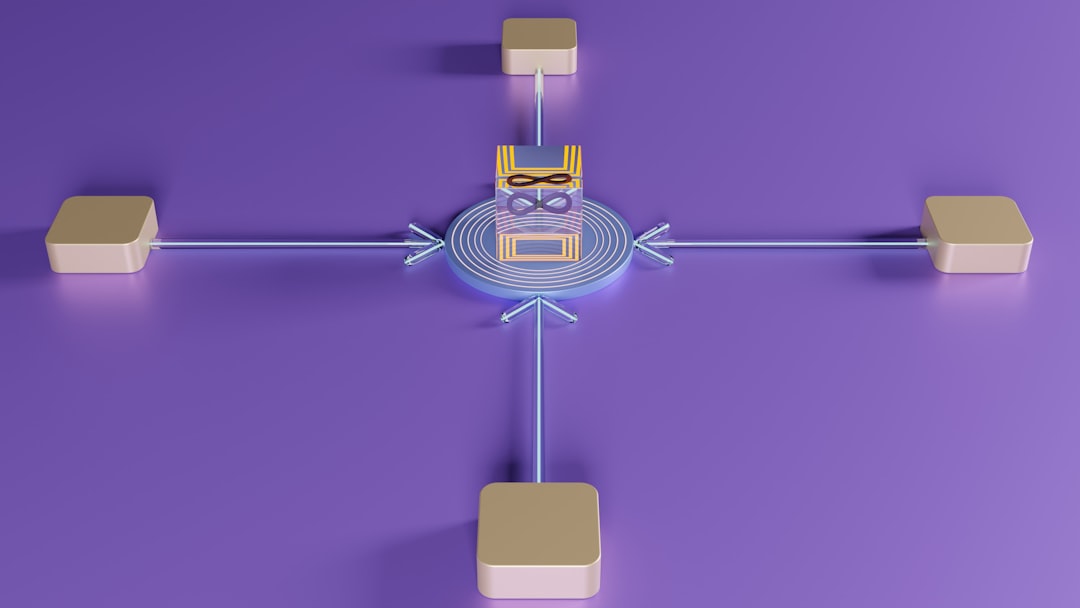
Before we dive into the data, let’s ground ourselves. A Layer 2 (L2) is essentially a secondary framework built on top of an existing blockchain (the Layer 1, like Ethereum or Bitcoin). The main chain handles security and finality, while the L2 handles the heavy lifting — processing transactions faster and cheaper — then periodically settles back to the main chain.
Think of it like this: Layer 1 is the federal government setting the rules, and Layer 2 is the efficient local municipality actually doing the day-to-day work without clogging up federal courts.
There are three dominant architectural approaches in 2026:
- Optimistic Rollups — Transactions are assumed valid by default; fraud proofs are submitted only when disputes arise. Examples: Optimism (OP Mainnet), Arbitrum.
- ZK-Rollups (Zero-Knowledge Rollups) — Validity proofs are generated cryptographically for every batch of transactions, offering near-instant finality. Examples: zkSync Era, Polygon zkEVM, StarkNet.
- State Channels — Two or more parties open a private channel, transact off-chain freely, and settle the final state on-chain. Best for repeated interactions. Examples: Bitcoin’s Lightning Network.
The Numbers Tell a Compelling Story
Here’s where it gets genuinely exciting. As of Q1 2026, the total value locked (TVL) across all Ethereum L2 networks has crossed the $85 billion mark, up from roughly $12 billion in early 2023. That’s not just growth — that’s validation.
Let’s look at some specific performance benchmarks that matter to real users:
- Transaction throughput: Ethereum L1 manages roughly 15–30 TPS (transactions per second). Arbitrum One now consistently handles 2,000–4,000 TPS under load. zkSync Era has demonstrated bursts above 10,000 TPS in controlled environments.
- Average transaction fees: On Ethereum L1, a simple token swap can still cost $5–$40 depending on congestion. On leading L2s in 2026, the same swap typically runs $0.01–$0.15 — a 99% cost reduction in many cases.
- Finality time: ZK-Rollups now achieve near-instant cryptographic finality (under 60 seconds in most implementations), addressing one of the early criticisms of the technology.
The math here is straightforward: if you’re building a decentralized application (dApp) that expects millions of users, the L1 alone simply cannot serve them economically. L2s aren’t optional anymore — they’re the default serious builders choose.
Real-World Examples: Who’s Getting It Right?
Let’s look at both global and regional implementations that illustrate how L2 scalability is playing out in practice.
Arbitrum & the DeFi Renaissance: Arbitrum One has become the de facto home for advanced DeFi protocols in 2026. GMX (a decentralized perpetuals exchange) processes over $2 billion in daily volume almost entirely on Arbitrum — fees that would be prohibitive on L1 are negligible on L2, enabling a trading experience that genuinely rivals centralized exchanges.
South Korea’s Blockchain Gaming Sector: Korean gaming giants have leaned heavily into L2 solutions. Kakao’s Kaikas ecosystem and several independent studios have migrated their in-game asset economies to Polygon zkEVM and custom app-chains built on the OP Stack. The result? Korean mobile blockchain games are processing tens of millions of microtransactions monthly that would have been economically impossible two years ago. This is particularly relevant given Korea’s unique regulatory environment, where gaming tokens require careful compliance architecture — L2s allow developers to build that compliance layer more flexibly.
StarkNet & Enterprise Adoption in Europe: Several European financial institutions piloting tokenized bond settlements have turned to StarkNet’s ZK-proof architecture specifically because the cryptographic validity guarantees satisfy their internal audit requirements better than optimistic approaches. France’s experimental CBDC sandbox has reportedly run test batches through StarkNet infrastructure — a signal that ZK-Rollups are gaining institutional credibility.
Lightning Network’s Quiet Comeback: Bitcoin’s Lightning Network — the original L2 concept — has seen a resurgence in 2026, particularly in regions with high inflation. In Argentina and Nigeria, Lightning-enabled Bitcoin payments at point-of-sale have grown substantially, with transaction volumes doubling year-over-year as user-friendly wallets (like Phoenix and Mutiny) dramatically lowered the technical barrier to entry.
The Honest Challenges (Because Nothing Is Perfect)
It would be intellectually dishonest to paint L2s as a solved problem. Here’s what’s still genuinely tricky:
- Liquidity fragmentation: With dozens of competing L2s, liquidity is scattered across ecosystems. Bridging assets between L2 networks still carries risk (bridge hacks remain a real threat) and UX friction.
- Centralization risks in sequencers: Most L2s today use a centralized sequencer to order transactions — meaning one entity has significant power over transaction inclusion and ordering. Decentralizing sequencers is a major 2026 research focus.
- ZK proving costs: Generating zero-knowledge proofs is computationally intensive. While hardware acceleration (specialized ZK ASICs) is advancing rapidly, proving costs still add overhead that affects fee structures.
- User experience complexity: Ask a non-technical user to explain which network their wallet is on, and you’ll often get a blank stare. Multi-chain complexity remains a genuine barrier to mainstream adoption.
Realistic Alternatives Based on Your Situation
Here’s where I want to be practical with you, because your ideal L2 strategy really does depend on your use case:
- If you’re a DeFi power user: Arbitrum One or Base (Coinbase’s L2) offer the deepest liquidity and most battle-tested protocols. Start there, understand bridge risks, and diversify carefully.
- If you’re a developer building a consumer app: The OP Stack (used by Base, OP Mainnet, and many app-chains) offers the most mature developer tooling and the largest support community in 2026.
- If institutional compliance is your priority: ZK-Rollup architectures — StarkNet or Polygon zkEVM — give you the cryptographic auditability that enterprises and regulated entities increasingly demand.
- If you’re in a high-inflation economy using crypto for payments: Lightning Network for Bitcoin remains the most battle-tested, censorship-resistant payment layer with the lowest fees for small transactions.
- If you’re just exploring as a curious newcomer: Start on Base. It’s backed by Coinbase infrastructure, has excellent fiat on-ramps, and the ecosystem is beginner-friendly without sacrificing access to serious dApps.
The key insight I’d offer: don’t chase the “best” L2 in the abstract. Chase the one that best fits your specific workflow, risk tolerance, and technical comfort level.
The Layer 2 story in 2026 isn’t about one winner taking all — it’s about a maturing ecosystem where different solutions genuinely excel at different things. The challenge (and the opportunity) is knowing which tool fits your particular job.
Editor’s Comment : Layer 2 solutions have crossed the line from promising experiment to foundational infrastructure in 2026 — but the fragmentation challenge is real and underappreciated. My honest take? The next 18 months will be defined less by raw performance benchmarks and more by which L2 ecosystems crack the user experience problem. The technology is largely there; the interface between humans and that technology still needs serious work. Watch for wallet abstraction and chain-agnostic UX as the real battlegrounds worth following.
📚 관련된 다른 글도 읽어 보세요
- Web3, Blockchain & Virtual Assets in 2026: Where Is the Ecosystem Actually Heading?
- 2026년 중앙은행 디지털화폐(CBDC) 도입 현황 완벽 정리 — 우리 지갑은 어떻게 바뀔까?
- DeFi & NFT Market Ecosystem Report 2026: What’s Actually Happening and Where It’s Headed
태그: [‘Layer2 blockchain’, ‘blockchain scalability 2026’, ‘ZK rollups’, ‘Ethereum Layer 2’, ‘Optimistic rollups’, ‘crypto infrastructure’, ‘DeFi scaling solutions’]
Leave a Reply