Picture this: it’s early 2026, and your cousin calls you excitedly about putting his savings into crypto. He’s heard about Bitcoin from his dad’s generation and Ethereum from his tech-savvy friends — and he has absolutely no idea which one actually matters more right now. Sound familiar? This conversation is happening in living rooms and coffee shops all over the world, and honestly, it deserves a much more nuanced answer than “just buy Bitcoin” or “Ethereum is the future.” Let’s actually sit down and think through this together, because the gap between these two ecosystems in 2026 is both wider and more interesting than most people realize.
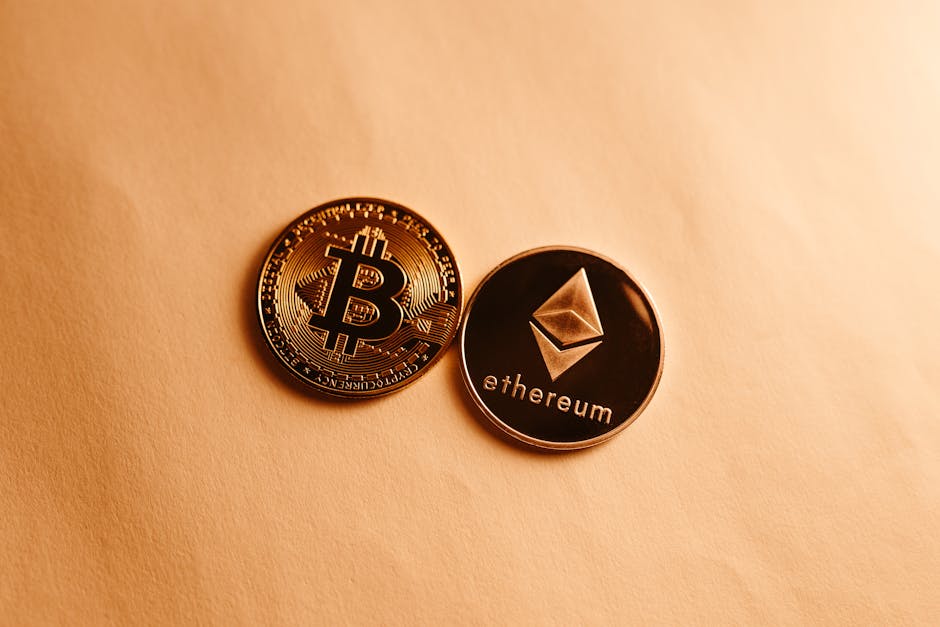
🔍 The State of Play: Where Both Ecosystems Stand in 2026
By March 2026, Bitcoin’s market capitalization has stabilized in a dominant range that reflects its role as a macro asset — often called “digital gold” by institutional players. Major sovereign wealth funds from Norway, Abu Dhabi, and South Korea have allocated portions of their portfolios to BTC, and the U.S. Strategic Bitcoin Reserve, formally established in late 2025, has added a geopolitical dimension to its valuation story that simply didn’t exist three years ago.
Ethereum, meanwhile, has continued its transformation into something far more complex than a simple cryptocurrency. With the full rollout of Ethereum 2.0 infrastructure and the maturation of Layer-2 solutions like Arbitrum One, Base, and zkSync Era, the Ethereum ecosystem now processes well over 200 transactions per second across its combined network — a staggering improvement from the sluggish 15 TPS mainnet days of the early 2020s.
Here’s the thing though: comparing Bitcoin and Ethereum in 2026 is a little like comparing a central bank to a software platform. They’ve diverged so dramatically in purpose that a head-to-head “who wins” framing almost misses the point. But let’s dig into what that actually means for you.
📊 Ecosystem Metrics: By the Numbers
Let’s get specific, because vague statements don’t help anyone make decisions. Here’s how the two ecosystems compare across key dimensions in Q1 2026:
- Total Value Locked (TVL) in DeFi: Ethereum’s ecosystem (mainnet + L2s combined) holds approximately $85–90 billion in TVL, making it the undisputed home of decentralized finance. Bitcoin’s DeFi presence via wrapped BTC (WBTC) and newer protocols like Babylon contributes roughly $8–10 billion — significant, but a fraction of ETH’s ecosystem.
- Developer Activity: Ethereum continues to dominate developer mindshare. According to Electric Capital’s 2026 Developer Report, Ethereum-compatible ecosystems attract nearly 4x more monthly active developers than Bitcoin-native development. This gap has actually widened since 2024.
- Institutional Adoption: Bitcoin leads decisively here. Bitcoin ETFs globally manage over $120 billion in assets under management as of early 2026. Ethereum ETFs, while approved and growing, manage roughly $28 billion — impressive, but not in the same league yet for traditional finance exposure.
- Network Security (Hash Rate / Staking): Bitcoin’s proof-of-work hash rate reached new all-time highs in late 2025 following the fourth halving, with industrial miners now concentrated in regions with cheap renewable energy (Iceland, Paraguay, and parts of the U.S. Pacific Northwest). Ethereum’s staked ETH represents about 32% of total supply, creating a robust and economically entrenched validator network.
- Average Transaction Fee: Bitcoin mainnet fees fluctuate but average $2–8 per transaction in 2026, with Lightning Network micropayments often under $0.01. Ethereum mainnet fees have been significantly reduced post-EIP-4844, averaging $0.50–3 on L1, while L2 transactions routinely cost under $0.05.
- NFT & Gaming Activity: Ethereum and its L2s remain the primary home for NFT marketplaces and blockchain gaming infrastructure, accounting for roughly 65% of all NFT trading volume globally in 2026.
🌍 Real-World Examples: How Countries and Companies Are Choosing
The divergence becomes even clearer when you look at how different players around the world are actually deploying these technologies — not just speculating on them.
El Salvador’s Bitcoin experiment has matured considerably by 2026. After the initial rocky rollout of the Chivo wallet, the country has doubled down on Bitcoin as a savings and remittance tool, with Lightning Network infrastructure expanding to rural areas. The IMF deal struck in 2025 required some policy modifications, but Bitcoin’s status as legal tender remains. The lesson? Bitcoin works exceptionally well as a borderless savings instrument and payment rail in environments with currency instability.
South Korea and Singapore tell a different story — one dominated by Ethereum infrastructure. Seoul’s Metaverse city project, partially built on Ethereum L2 rails, and Singapore’s tokenized government bond pilots (using ERC-20 compatible frameworks) demonstrate how Ethereum’s programmability makes it the go-to for complex financial and governmental applications. Korea’s Financial Services Commission approved several Ethereum-based RWA (Real World Asset) tokenization platforms in 2025, with billions in real estate and bonds now tokenized on-chain.
In the United States, the contrast is fascinating. BlackRock and Fidelity’s Bitcoin ETFs dominate retirement portfolio conversations, while JPMorgan’s Onyx platform and Coinbase’s Base (an Ethereum L2) handle the institutional DeFi and tokenized asset workloads. It’s not either/or — it’s a layered ecosystem where Bitcoin anchors macro portfolios and Ethereum powers the application layer.
In emerging markets like Nigeria, Argentina, and Vietnam, everyday users are increasingly using stablecoins on Ethereum L2s for dollar-denominated savings and commerce — often without even realizing they’re “using Ethereum.” The infrastructure is invisible; the utility is immediate.

⚖️ The Core Philosophical Difference (And Why It Matters)
Here’s something worth sitting with: Bitcoin’s community has deliberately resisted feature expansion. The Bitcoin development philosophy — often called “ossification” by critics, “security through simplicity” by supporters — means that Bitcoin in 2026 works almost identically to Bitcoin in 2019 at the protocol level. That’s not a bug; that’s the feature. Predictability and immutability are the product.
Ethereum, by contrast, has undergone radical transformation: The Merge, EIP-1559, EIP-4844 (proto-danksharding), and the ongoing development toward full danksharding make Ethereum a rapidly evolving protocol. This creates a vibrant, innovative ecosystem — but also introduces complexity, upgrade risk, and a steeper learning curve for both developers and regulators trying to assess it.
For someone building a savings strategy, Bitcoin’s simplicity is a feature. For someone building a decentralized application, lending protocol, or tokenized asset platform, Ethereum’s programmability is non-negotiable.
🛣️ Realistic Alternatives: So What Should You Actually Do?
Okay, let’s get practical — because this is where most comparisons drop the ball by giving generic advice. Your situation determines your answer:
- If you’re a first-time investor with a long time horizon: A 70/30 split favoring Bitcoin makes sense as a starting point in 2026. Bitcoin’s regulatory clarity (especially post-ETF approvals globally), institutional backing, and simple value proposition make it the lower-complexity entry point. Start there, understand it fully, then expand.
- If you’re a developer or entrepreneur: The Ethereum ecosystem is where the action is. The developer tooling (Hardhat, Foundry, Viem), the L2 grant programs, and the existing DeFi composability create an environment where you can build on proven infrastructure rather than starting from scratch. Solana is a compelling competitor here too, but Ethereum’s security and liquidity depth still edge it out for serious financial applications.
- If you’re building a cross-border payment business: Don’t overlook the Bitcoin Lightning Network in 2026. Strike, River, and regional payment processors have made LN integration dramatically easier, and for high-volume, low-value transactions (think remittances, micropayments), it’s genuinely competitive with traditional rails.
- If you’re a traditional finance institution: You’re almost certainly already exploring both — Bitcoin for balance sheet and ETF product creation, Ethereum infrastructure for tokenization pilots. The playbook is already being written by your competitors.
- If you simply want to preserve purchasing power: Bitcoin’s fixed supply of 21 million coins, combined with growing sovereign and institutional adoption, continues to make its digital scarcity narrative the most straightforward value proposition in the space.
🔮 Looking Ahead: The Next 12–18 Months
The key catalysts to watch through late 2026 and into 2027 include Ethereum’s full danksharding implementation (which could push L1 data throughput by another 10–100x), Bitcoin’s evolving role in global reserve asset conversations, and the regulatory frameworks being finalized in the EU under MiCA’s expanded guidelines. The competitive dynamics aren’t static — this is genuinely one of the most rapidly evolving technological landscapes in economic history.
What seems increasingly clear is that the “Bitcoin vs. Ethereum” framing is becoming outdated. A more useful mental model might be: Bitcoin is the foundation layer of digital monetary sovereignty, and Ethereum is the programmable economy built on top of — and alongside — that foundation. They’re not enemies; they’re different tools solving different problems, and sophisticated participants in 2026 are learning to use both.
Editor’s Comment : After spending time with both ecosystems, what strikes me most in 2026 is how the communities themselves reflect their technologies. Bitcoin communities are often quieter, more conviction-based, and deeply skeptical of change — while Ethereum communities are noisier, more experimental, and sometimes exhaustingly optimistic. Neither is wrong; both are honest expressions of their underlying philosophy. The real question worth asking yourself isn’t “which is better” but “which problem am I actually trying to solve?” — because in 2026, both ecosystems are genuinely good at being what they’ve chosen to be.
📚 관련된 다른 글도 읽어 보세요
- Crypto Exchange Ecosystems in 2026: A Deep-Dive Comparative Analysis You Can’t Afford to Miss
- NFT 시장 변화 2026 트렌드: 거품은 꺼졌지만, 진짜 게임은 지금부터입니다
- 2026 Crypto Market: How Institutional Investors Are Quietly Reshaping Everything You Think You Know
태그: [‘Bitcoin vs Ethereum 2026’, ‘blockchain ecosystem comparison’, ‘crypto investment strategy’, ‘Ethereum DeFi Layer2’, ‘Bitcoin institutional adoption’, ‘digital asset analysis’, ‘cryptocurrency guide 2026’]
Leave a Reply