Picture this: it’s early 2026, and your colleague at the coffee machine casually mentions they just used a Bitcoin payment channel to split the lunch bill. No wallet app fumbling, no gas fee anxiety — just a tap. A year ago, that scenario would’ve felt like science fiction to most people. But here we are, and the crypto ecosystem has quietly — and sometimes loudly — transformed in ways that even seasoned investors didn’t fully anticipate.
Let’s think through what’s actually changed in 2026, why it matters, and most importantly, how you can navigate this new landscape whether you’re a curious newcomer or a battle-hardened HODLer.
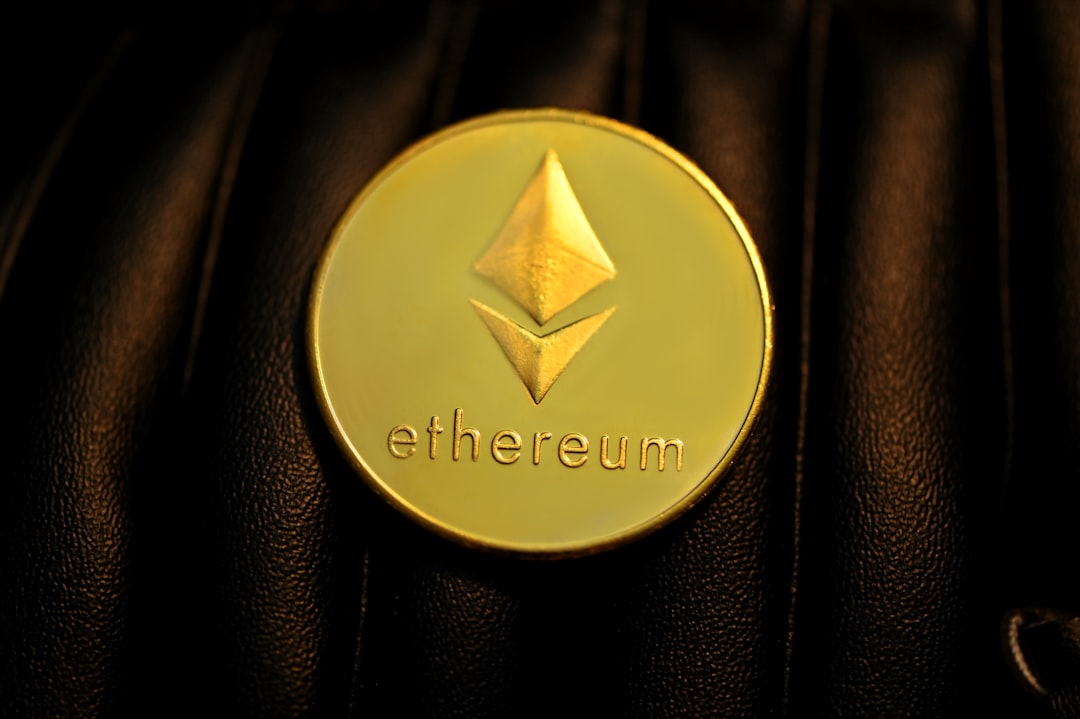
The Bitcoin Layer 2 Revolution: Not Just Lightning Anymore
If you’ve been tracking Bitcoin since its early days, you know its core chain was never really built for speed or cheap microtransactions. The Lightning Network was the first credible answer to that, but 2026 has introduced a far richer ecosystem of Layer 2 solutions. Ark Protocol, which matured considerably through late 2025, now handles millions of daily off-chain transactions with near-instant finality. Meanwhile, BitVM-based rollups — a concept that was purely theoretical just 18 months ago — are enabling rudimentary smart contract logic directly secured by Bitcoin’s proof-of-work.
What does the data say? On-chain analytics platforms now track over $180 billion in total value locked (TVL) across Bitcoin Layer 2 networks as of Q1 2026, a figure that was barely $12 billion at the start of 2024. That’s not a typo — it’s a 15x expansion driven by institutional appetite and genuine retail utility.
Ethereum’s Post-Dencun World: Blobs, Rollups, and the Modular Stack
Ethereum, on the other hand, has been on a different kind of journey. After the landmark Dencun upgrade introduced EIP-4844 (proto-danksharding), Layer 2 gas fees on networks like Arbitrum, Optimism, and Base dropped to fractions of a cent. In 2026, the full Pectra upgrade has pushed Ethereum further toward a modular architecture where the base layer acts primarily as a settlement and data availability hub rather than an execution environment.
This is a profound philosophical shift. Ethereum is essentially becoming the “trust anchor” of a vast ecosystem rather than the place where most activity happens. Think of it like the internet’s TCP/IP layer — most users never interact with it directly, but everything above it depends on it.
- Base (Coinbase L2): Now processing over 8 million daily active addresses as of March 2026, with a thriving DeFi and social-app ecosystem.
- ZKSync Era: Zero-knowledge proofs have matured enough that ZK-based rollups now handle complex DeFi operations with near-instant finality and Ethereum-level security.
- Starknet: Gaining serious traction in gaming and on-chain AI agent infrastructure, two sectors exploding in 2026.
- OP Stack chains: Dozens of custom “app-chains” built on Optimism’s stack are now live, from healthcare data management to tokenized real-world assets (RWAs).
Real-World Examples: From Seoul to São Paulo
It’s easy to get lost in technical jargon, so let’s ground this in real stories from around the world.
In South Korea, the Financial Services Commission finalized its crypto asset framework in early 2026, which has enabled major banks like KB Kookmin and Shinhan to offer Ethereum-based tokenized bond products to retail investors. These aren’t speculative altcoins — these are government and corporate bonds represented as on-chain tokens, settled on Ethereum L2s with traditional custodial backing. The result? Average Korean retail investors now have access to bond instruments previously reserved for institutional players, with as little as ₩10,000 (~$7) minimum investment.
Meanwhile, in Brazil, the central bank’s Drex digital currency platform — which launched its pilot in 2025 — has begun integrating with Ethereum-compatible infrastructure. Brazilian fintech startups are building DeFi protocols that bridge Drex with stablecoins and real-world asset tokens, creating a hybrid finance layer that’s neither purely TradFi nor purely DeFi. It’s a genuinely novel financial ecosystem, and it’s happening right now.
Even in El Salvador, the Bitcoin experiment has matured. After the initial turbulence of mandatory Bitcoin acceptance, the government pivoted to a voluntary-but-incentivized model. By 2026, Lightning Network merchant adoption in San Salvador has stabilized at around 34% of formal businesses — not universal, but genuinely meaningful as a real-world stress test of Bitcoin as a payment rail.

The Competitive Tension: Bitcoin vs. Ethereum Narrative in 2026
Here’s where things get interesting — and a little philosophically spicy. For years, Bitcoin maximalists and Ethereum enthusiasts argued past each other. But in 2026, the lines are more blurred than ever.
Bitcoin is increasingly behaving like a programmable asset layer, not just “digital gold.” The Ordinals and Runes protocols from prior years seeded a culture of on-chain Bitcoin assets, and BitVM-enabled bridges are letting BTC flow into DeFi ecosystems with decreasing trust assumptions. Some argue this “financialization” of Bitcoin betrays its original purpose; others see it as inevitable and even healthy maturation.
Ethereum, conversely, is leaning harder into being an infrastructure settlement layer — arguably becoming more “conservative” in its base-layer behavior even as the ecosystem above it explodes in complexity. There’s a fascinating irony: Bitcoin is getting more expressive, while Ethereum is getting more minimal at its core. They’re converging from opposite directions.
What Should You Actually Do With This Information?
Alright, let’s get practical — because understanding ecosystem shifts is only valuable if it informs real decisions. Here are some realistic approaches based on different situations:
- If you’re new to crypto in 2026: The best entry point is arguably through L2 ecosystems rather than the base chains. Start by experimenting with Base or Arbitrum using small amounts — the UX is dramatically better than it was even a year ago, and fees are negligible. Understand what you own before you scale up.
- If you’re a long-term Bitcoin holder: Pay attention to the Layer 2 developments without necessarily deploying your BTC into them carelessly. Wrapped BTC solutions still carry bridge risks. Evaluate each product’s security model critically — “BTC yield” products in particular deserve healthy skepticism.
- If you’re a developer or entrepreneur: The RWA (real-world asset) tokenization sector is arguably the most structurally underbuilt area of Ethereum L2s right now. Regulatory clarity in key markets (EU’s MiCA framework is now in full effect) means the legal groundwork exists — the application layer is still being built.
- If you’re a traditional investor: Bitcoin ETFs (now mature in the US and EU) offer clean exposure without custody complexity. For Ethereum, the staking yield component (~3.2% annualized as of early 2026) makes ETH-staking ETFs an interesting income-generating crypto allocation for a diversified portfolio.
- If you’re concerned about volatility: Consider that stablecoins operating on Ethereum L2s — particularly USDC on Base or USDT on Arbitrum — now offer a way to access on-chain financial tools (lending, yield, cross-border payments) without direct crypto price exposure. This is a genuinely underappreciated use case.
Risks That Still Deserve Honest Attention
Let’s not get swept up in enthusiasm without acknowledging real risks. In 2026, the ecosystem is more mature — but maturity doesn’t mean risk-free.
Smart contract vulnerabilities remain a real threat. Even audited protocols on well-established L2s have suffered exploits in the past 12 months. Diversification across protocols — not just assets — is a principle worth internalizing.
Regulatory fragmentation is still a reality. While the EU and Singapore have relatively clear frameworks, the US regulatory environment remains patchier than many hoped by this point. Cross-border crypto activity can still create unexpected compliance headaches for individuals and businesses alike.
And market concentration risks on the Ethereum L2 side are worth noting — Base alone handles a disproportionate share of activity, which creates systemic dependencies on Coinbase’s infrastructure decisions. Decentralization at the L2 level is still an ongoing work in progress.
Thinking through these risks isn’t pessimism — it’s just good ecosystem literacy. The people who thrive in this space are those who understand both the opportunities and the structural vulnerabilities with equal clarity.
Editor’s Comment : What excites me most about the 2026 Bitcoin and Ethereum landscape isn’t the price action — it’s that for the first time, the technology is genuinely meeting the ambition. Layer 2s have made crypto usable; tokenization has made it relevant to traditional finance; and the blurring lines between Bitcoin and Ethereum narratives suggest a maturing ecosystem that’s less about tribalism and more about finding the right tool for the right job. If you’ve been sitting on the sidelines waiting for “crypto to grow up,” well — it hasn’t finished growing, but it’s definitely past its awkward teenage years. The best strategy now isn’t to predict which chain “wins” — it’s to understand what problem each piece of the ecosystem actually solves, and position yourself accordingly.
태그: [‘Bitcoin 2026’, ‘Ethereum ecosystem 2026’, ‘Layer 2 crypto’, ‘blockchain tokenization’, ‘DeFi 2026’, ‘crypto investment strategy’, ‘Ethereum Layer 2 rollups’]
Leave a Reply