Back in early 2023, a friend of mine — a cautious, spreadsheet-loving financial analyst — quietly bought his first Bitcoin. Not because he believed in the technology, but because he was terrified of being left behind. Fast forward to March 2026, and he’s now managing a diversified digital asset portfolio that includes layer-2 tokens, tokenized real-world assets (RWAs), and even a stake in a decentralized autonomous organization (DAO). His journey mirrors what’s happened to the broader crypto ecosystem: it has grown from a speculative playground into something far more structurally complex — and honestly, more interesting.
So where does that leave us today? Let’s reason through the 2026 virtual asset market ecosystem together, piece by piece.
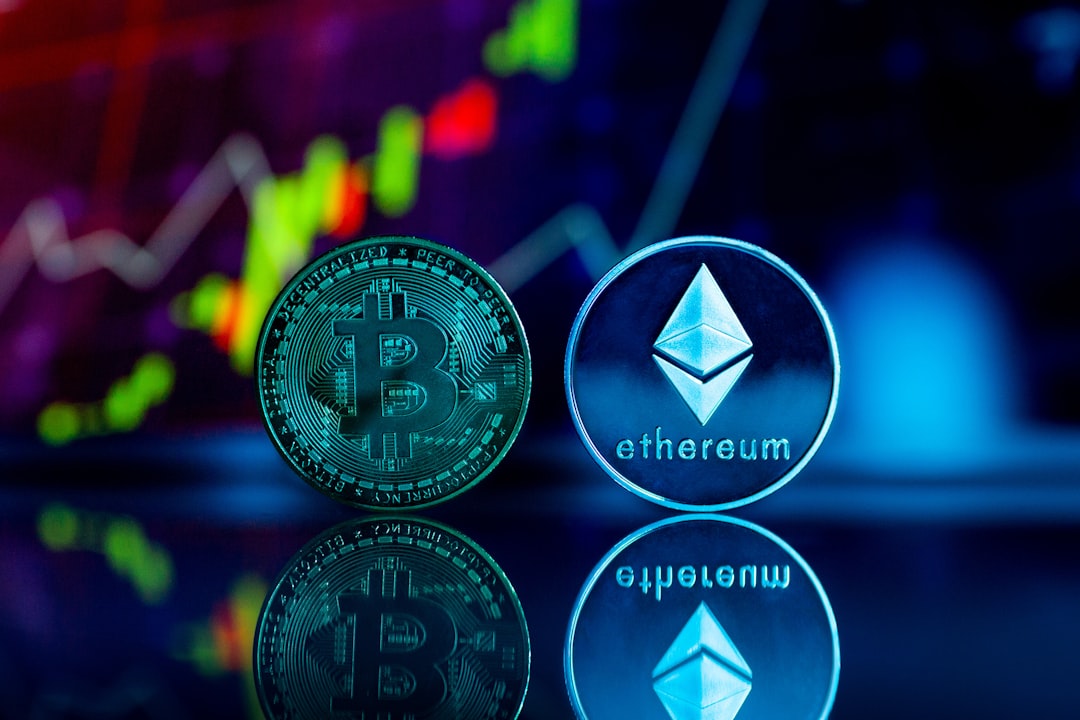
📊 The Numbers That Define the 2026 Crypto Landscape
The global cryptocurrency market capitalization as of early 2026 sits in the range of $4.2–$4.8 trillion USD, representing a near-doubling from the 2024 lows. But raw market cap tells only part of the story. What’s more revealing is where the capital is flowing.
- Bitcoin (BTC) dominance has stabilized around 42–45%, signaling a maturing market where altcoins and utility tokens are carving out genuine niches rather than just riding Bitcoin’s coattails.
- Ethereum (ETH) continues to dominate smart contract infrastructure, but its market share faces real pressure from Solana, Sui, and Aptos — all of which have seen developer activity surge in 2026.
- Real-World Asset (RWA) tokenization has crossed the $50 billion total value locked (TVL) threshold, with institutional players like BlackRock, Franklin Templeton, and several Korean conglomerates actively tokenizing bonds, real estate, and trade finance instruments.
- Stablecoins now represent over $230 billion in total supply, functioning less as a crypto on-ramp and more as a foundational layer for cross-border payments and DeFi (Decentralized Finance) protocols.
- Layer-2 solutions on Ethereum — think Arbitrum, Optimism, and Base — are processing more daily transactions than many traditional financial networks, with fees that have dropped to near-negligible levels.
🌍 Global Regulatory Frameworks: The Game-Changer Nobody Wanted to Talk About
Here’s something that would have sounded absurd in 2021: regulatory clarity is now a competitive advantage. Nations that established coherent virtual asset frameworks early are reaping enormous benefits in 2026.
The European Union’s MiCA (Markets in Crypto-Assets) regulation, which came into full force in 2024, has created a predictable operating environment across 27 member states. The result? A significant wave of crypto businesses relocating European headquarters to Germany, France, and the Netherlands. Compliance costs were high initially, but the institutional money that followed made it worthwhile.
South Korea has become a fascinating case study. Following the implementation of the Virtual Asset User Protection Act and subsequent amendments in 2025, South Korean exchanges like Upbit and Bithumb have undergone significant structural upgrades. The country’s retail trading volume remains among the highest per capita globally — a cultural enthusiasm for digital assets that shows no sign of cooling. Seoul is actively positioning itself as an “Asian crypto hub,” competing directly with Singapore and Dubai.
The United States, after years of regulatory ambiguity, has settled into a framework where the SEC oversees securities-like tokens while the CFTC governs commodity-classified assets like Bitcoin and Ethereum. It’s not perfect — enforcement actions are still frequent — but it’s workable, and institutional adoption has accelerated accordingly.
Japan and Singapore remain the gold standards for licensing frameworks in Asia, with both nations seeing record numbers of crypto-native businesses establish local entities in 2025–2026.
🔍 The Ecosystem Layers You Need to Understand in 2026
The crypto ecosystem in 2026 isn’t a flat market — it’s a multi-layered stack, each layer with its own dynamics and investment thesis:
- Layer 0 (Infrastructure): Cross-chain interoperability protocols like Polkadot, Cosmos, and LayerZero. These are the “plumbing” — less glamorous, but increasingly mission-critical.
- Layer 1 (Base Blockchains): Bitcoin, Ethereum, Solana, Sui, Aptos. Competition here is fierce, and developer mindshare is the ultimate metric.
- Layer 2 (Scaling Solutions): Arbitrum, Base, zkSync, Starknet. Transaction throughput and cost efficiency are driving adoption here.
- DeFi Protocols: Uniswap, Aave, Pendle, and newer yield-optimization platforms. TVL has recovered strongly in 2026, but regulatory scrutiny is increasing.
- RWA & Institutional Layer: Tokenized securities, bonds, real estate, and commodities. This is arguably the fastest-growing segment of 2026.
- Consumer & Social Layer: NFT ecosystems have pivoted toward utility — gaming assets, membership tokens, and identity verification — rather than pure speculation.
⚠️ The Risks That Deserve Honest Attention
Let’s not pretend it’s all upside — that would be irresponsible. The 2026 crypto ecosystem carries several structural risks worth reasoning through carefully:
- Concentration risk in stablecoins: USDT and USDC collectively represent roughly 85% of stablecoin supply. A major depegging event — however unlikely — would cascade across DeFi rapidly.
- Regulatory fragmentation: While MiCA brought EU clarity, the global picture is still patchwork. Operating across jurisdictions remains complex and expensive.
- Smart contract vulnerabilities: Despite maturing audit practices, protocol exploits continue. In 2025 alone, over $1.8 billion was lost to hacks across DeFi protocols — a sobering reminder that “code is law” cuts both ways.
- Macro sensitivity: Crypto assets have shown increasing correlation with risk-on equities during market stress events. The “digital gold” narrative for Bitcoin holds better than for altcoins, but even BTC isn’t fully decoupled.
💡 Realistic Strategies for Different Types of Participants in 2026
Here’s where I want to be genuinely useful rather than just descriptive. The right approach to the 2026 crypto ecosystem depends heavily on who you are:
- Conservative long-term investors: A Bitcoin and Ethereum core allocation (60–70% of crypto exposure) with regulated custody solutions makes sense. Dollar-cost averaging remains a statistically sound approach for volatile assets.
- Intermediate investors: Consider allocating a portion to RWA protocols and established DeFi blue chips (Aave, Uniswap). These offer yield opportunities with relatively understood risk profiles. Always research TVL, audit history, and team transparency.
- Active participants/builders: Layer-2 ecosystems and the intersection of AI + crypto (decentralized compute, inference markets) represent frontier opportunities. High risk, but potentially high reward if you have the technical literacy to evaluate projects.
- Businesses and enterprises: Tokenization of assets for liquidity and cross-border payments is no longer experimental — it’s becoming a competitive tool. Pilot programs with regulated RWA platforms are worth exploring seriously.
🔮 Where Is This All Heading by End of 2026?
Reasoning through the trajectory: we’re entering a phase where the crypto ecosystem’s growth story shifts from “will it survive?” to “how deeply will it integrate with traditional finance?” The answer, based on current data and institutional behavior, is: more deeply than most predicted, but more slowly than crypto maximalists hoped.
The most significant development to watch in the second half of 2026 is the potential approval of spot Ethereum ETF options trading in the US market and the continued expansion of tokenized government securities — both of which would bring meaningful new capital and legitimacy to the ecosystem.
Korea’s domestic market will be particularly interesting: with over 7 million active crypto investors and increasing institutional participation from Korean asset managers, the local ecosystem is poised for a maturation phase that could make it a genuine model for other mid-sized economies navigating crypto adoption.
Editor’s Comment : The 2026 crypto market isn’t the wild west of 2017 or even the chaotic boom-bust cycle of 2021. It’s something more nuanced — a genuine financial infrastructure layer in construction, with all the messiness, opportunity, and risk that entails. My honest take? The readers who will thrive in this environment aren’t the ones chasing moonshots, but the ones who take the time to understand the ecosystem’s layers, respect the risks, and make decisions proportional to their own financial situation. Stay curious, stay skeptical, and never invest more than you can afford to lose — that advice never goes out of style, no matter what year it is.
태그: [‘2026 crypto market’, ‘virtual asset ecosystem’, ‘blockchain investment 2026’, ‘RWA tokenization’, ‘DeFi trends 2026’, ‘cryptocurrency regulation’, ‘digital asset strategy’]
Leave a Reply